Inside a Pontoon Rebuild: What Happens in Our Shop
Marine · August 18, 2026 · 9 min read
Most people see two photos of a pontoon rebuild. The sad before, and the glorious after. What happens between those two pictures is about three weeks of work that nobody photographs, and honestly it is the interesting part.
So here is the whole thing, in order, using a camel and black interior that went through our shop recently. If you are trying to decide whether to have your boat done, knowing what actually happens makes the quote make a lot more sense.
Step one: everything comes off
The boat arrives and we take the interior apart. Every seat base, every backrest, every bolster, the console wrap, the corner pieces. Each one gets labeled, because a pontoon has a surprising number of pieces that look similar and fit in exactly one place.
This is also our first honest look at the boat. With the cushions off we can see the bases, the fasteners, and all the places where water has been living quietly for years. Nobody enjoys this part, but finding it now is the difference between a rebuild and a redo.
Step two: the part under the pretty part
Under almost every pontoon cushion is a plywood base. In Florida, plywood and humidity have a complicated relationship. Soft corners, delaminating layers and staples that pull straight out are all normal findings on a boat over about ten years old.
Where the wood is sound, we keep it. Where it is not, it gets replaced, and we use material that will not give up on the next owner. This is the step that separates a real rebuild from a recover, and it is also why we will not quote a full interior sight unseen. We cannot know what is under there until it is off.
Step three: foam, and why we care so much about it
Old marine foam is a sponge that has been working for a decade. It holds water, it dries slowly, and it has usually compressed into a shape that no longer matches the seat. New quick-dry marine foam sheds water and holds its shape, which is why a rebuilt cushion feels supportive instead of squashy.
Density matters more than thickness here, which we get into properly in foam 101. The short version is that a soft thick cushion feels great in the showroom and flat by August.
Step four: patterning
Every piece gets patterned off the original. Not measured and guessed, patterned. The old cover comes apart at the seams and becomes the template for the new one, which is how a rebuilt cushion ends up fitting the base tightly instead of looking like a slipcover.
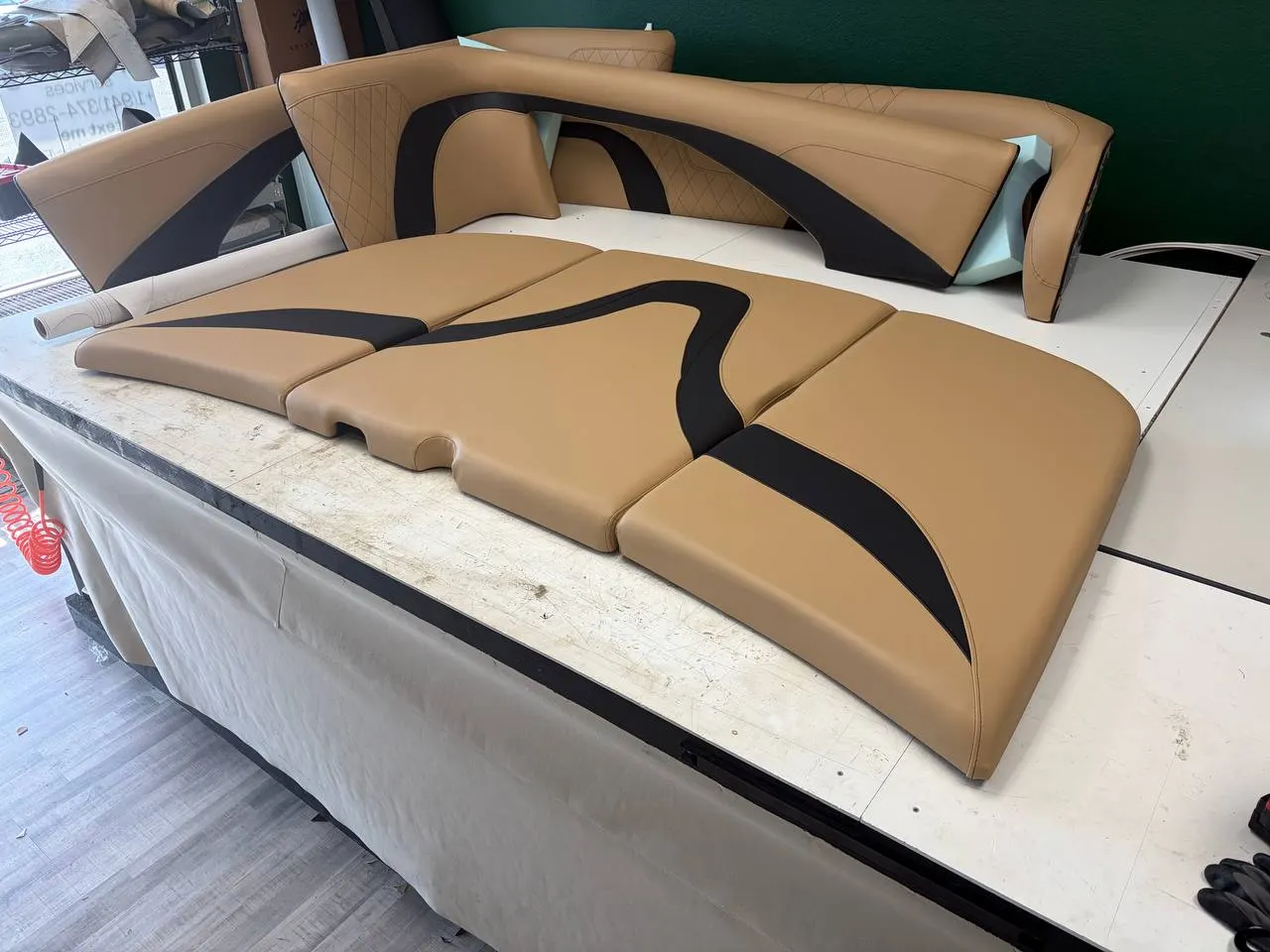
This is where the design decisions get made too. Two-tone layouts, where the sweep between colors falls, whether there is diamond stitching and how large the diamonds are. On the camel and black set, that long S-curve across the bow lounges was drawn on paper before a single stitch happened. Color choices deserve thought in this climate, and we made the case for that in the best colors for boat upholstery in Florida.
Step five: sewing
Panels get cut, stitch lines get laid in, piping gets made, and covers get assembled. Marine thread is not the same as furniture thread, because UV eats ordinary thread long before it touches good vinyl. There is a particular kind of heartbreak in seeing a five-year-old boat with perfect vinyl and seams that have rotted open.
You can judge a marine upholstery shop by the thread they use and the wood they are willing to replace. Both are invisible in the finished photo and both decide how long it lasts.
Step six: the parts that are not seats
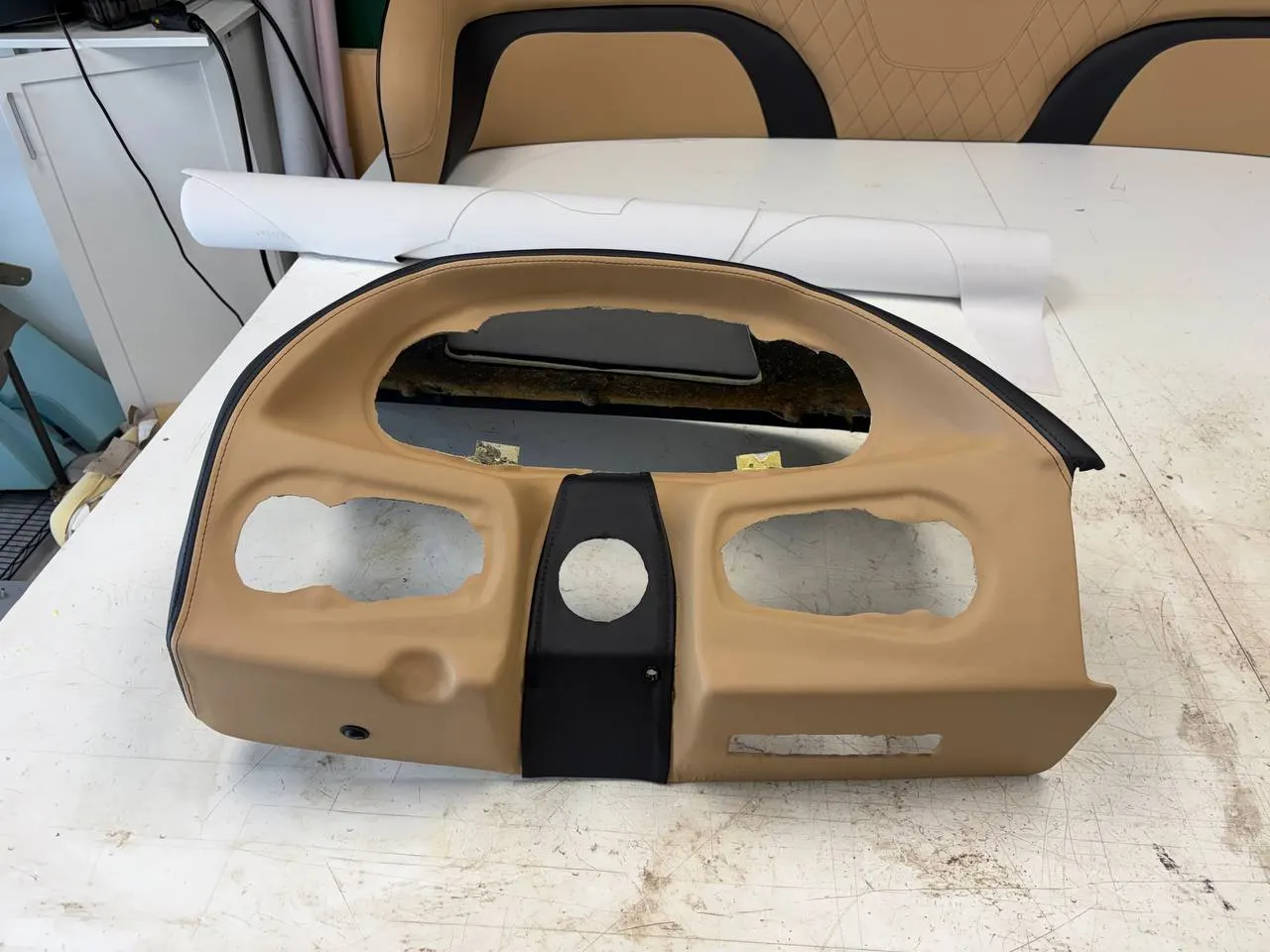
A pontoon is not just cushions. The helm console gets wrapped, the dash panel gets covered, the corner and gunwale pads get rebuilt. These pieces take disproportionate time because they are shaped, they have cutouts for gauges and speakers, and they have to fit hardware that does not move. They also transform the boat, because a spotless new seat next to a chalky old console just makes the console look worse. More on those in helm and console pads.
Step seven: reinstall, and the fussy hour at the end
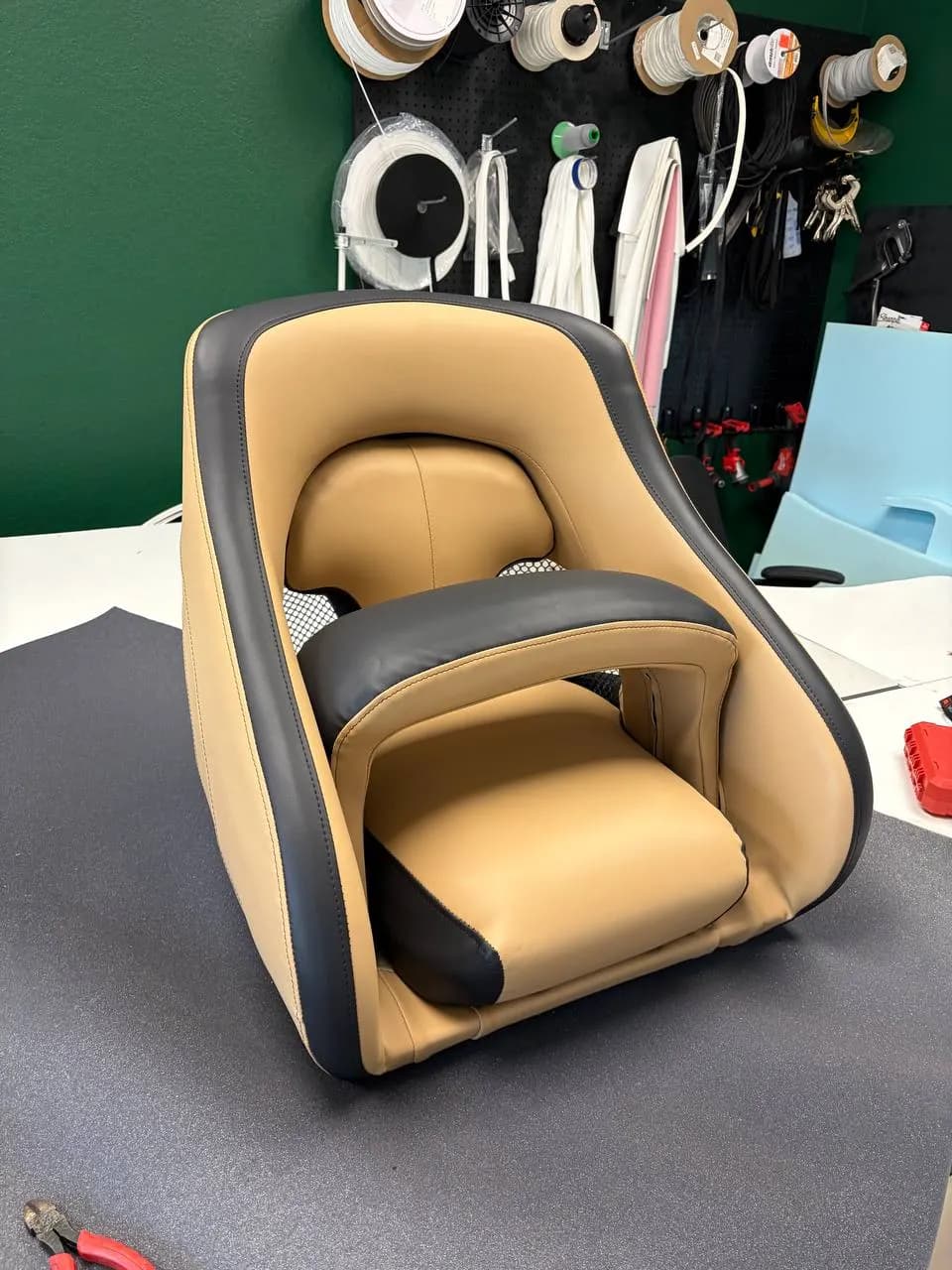
Everything goes back in, which sounds simple and never is. Fasteners get renewed, alignment gets checked, lids get tested so they open without fouling the piece next to them. Then somebody sits in every seat, because a seat that looks right and feels wrong is not finished.
So how long does it take
For a full interior, weeks rather than days. The variables are how much wood needs replacing, how many pieces there are, and what time of year you booked. Spring is our busiest stretch because everybody wants their boat perfect for the season at once. Autumn and early winter are far easier to get into, which is a genuinely useful thing to know. Seasonal boating info for the state is kept at BoatUS.
Worth it or not
For a pontoon in decent structural shape, a rebuilt interior is the single biggest change you can make for the money, and it buys you years. The decision framework is in our pontoon seat replacement guide, the numbers are in cost to reupholster pontoon boat seats, and the service page is pontoon seat reupholstery. Finished boats are in the projects section if you want to see how they come out.
Frequently asked
How long does a full pontoon reupholstery take?
For a complete interior, plan on a few weeks in the shop rather than a few days. Teardown, new plywood and foam where needed, patterning, sewing and reinstall all take real time, and we would rather tell you a true timeline than a hopeful one. Booking outside of peak season shortens the wait considerably.
Do you replace the wood under the cushions?
Whenever it needs it, and on a Florida pontoon it usually needs it somewhere. Plywood bases trap moisture, soften and eventually stop holding staples. Covering rotten wood with beautiful new vinyl is the one shortcut we will not take.
Can I keep my old foam to save money?
Sometimes on newer boats, rarely on older ones. Foam that has been soaking up humidity for a decade is heavy, slow to dry and already collapsed. New quick-dry foam is a meaningful part of why a rebuilt seat feels new rather than just looking new.
Thinking about your boat? Send us photos of the interior, including one of a cushion lifted up if you can manage it, and we will give you a real number and a real timeline.
Let's give your piece a second life
Marine, auto, furniture and more. Send a few photos or bring it by the shop for an honest, free estimate.