How to Reupholster a Dining Room Without Closing It
Commercial · September 2, 2026 · 8 min read
Every restaurant owner we talk to has the same worry, and it is never about the upholstery. It is about the closed sign. Tired booths are annoying. A dining room out of service for a week is a genuine financial event, and no amount of new vinyl makes up for it.
So here is the honest answer. In most dining rooms, you do not have to close. Not for a day. You do have to plan it properly, and the planning is the part worth understanding before you start collecting quotes.
The trick: build first, install second
The thing that forces restaurants to close is doing the work in the room. Stripping a booth down, rebuilding it on site, waiting for it, then moving to the next one. That ties up a section for days and fills your dining room with tools.
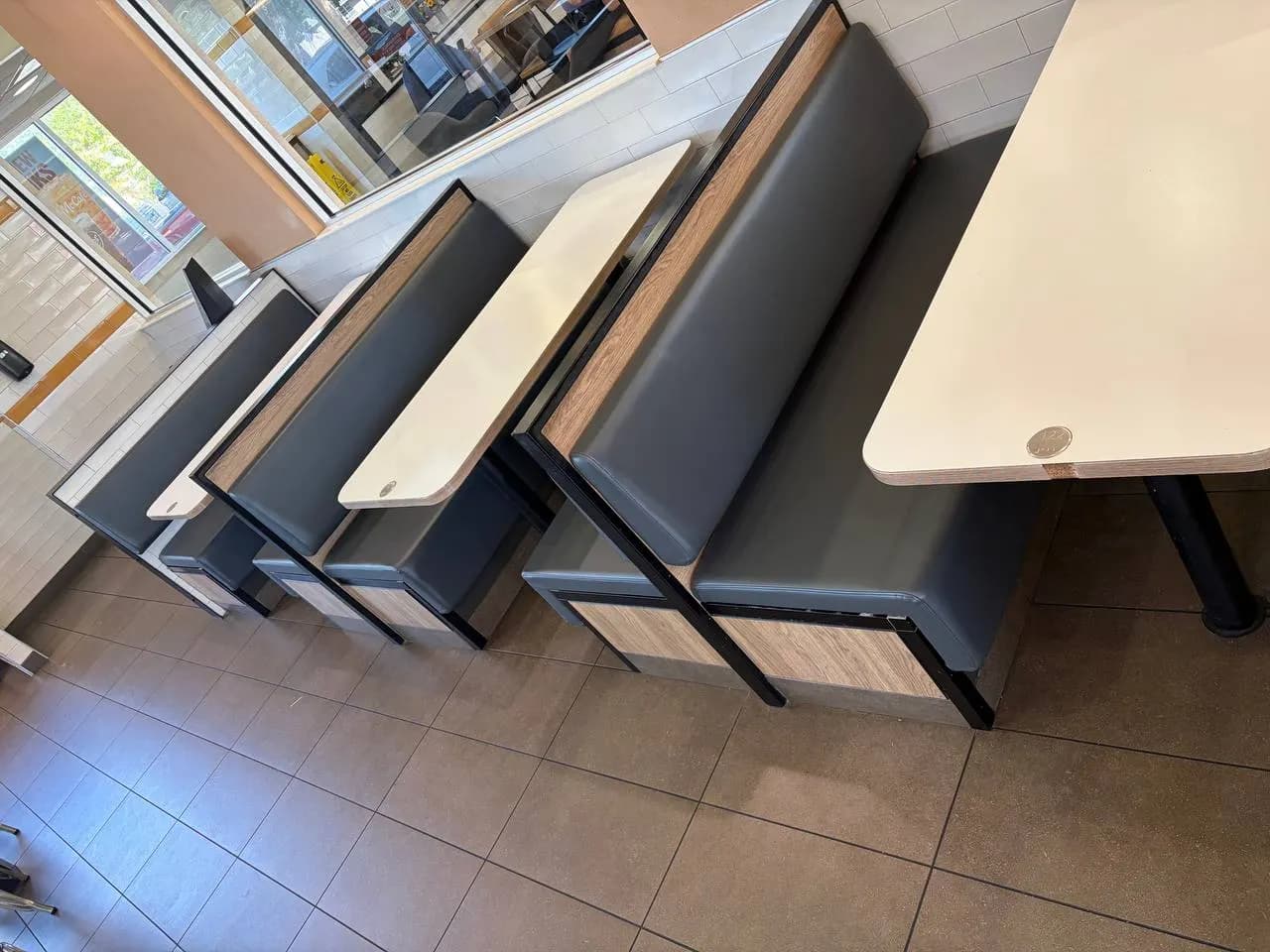
The better approach separates the two. We template and pattern from one booth, then build every cushion and back panel in the shop while your dining room carries on completely normally. The only time we are in your building is for the templating visit and the swap. Everything in between happens on our benches.
A swap is fast. Unbolt, lift out, drop in, fasten. What takes a week to rebuild in place takes a couple of hours to install.
Three ways to schedule it
- Overnight. We come in after close, swap a block of booths, and you open in the morning to a section that looks new. This is the cleanest option and the one most operators pick.
- Section by section during slow hours. Rope off a few booths mid-afternoon, work that block, release it before the evening rush. Slower overall but no night shift for your managers.
- Closed-day blitz. If you already close on a Monday, that day is free capacity. We do the whole room while nobody is there.
Which one fits depends on your hours, your covers by daypart and how many booths you have. It is a conversation, not a formula.
The room never needs to be closed. It just needs to be sequenced. Build in the shop, swap in the quiet hours, and your guests notice the result without ever seeing the work.
Template one, approve one, then commit
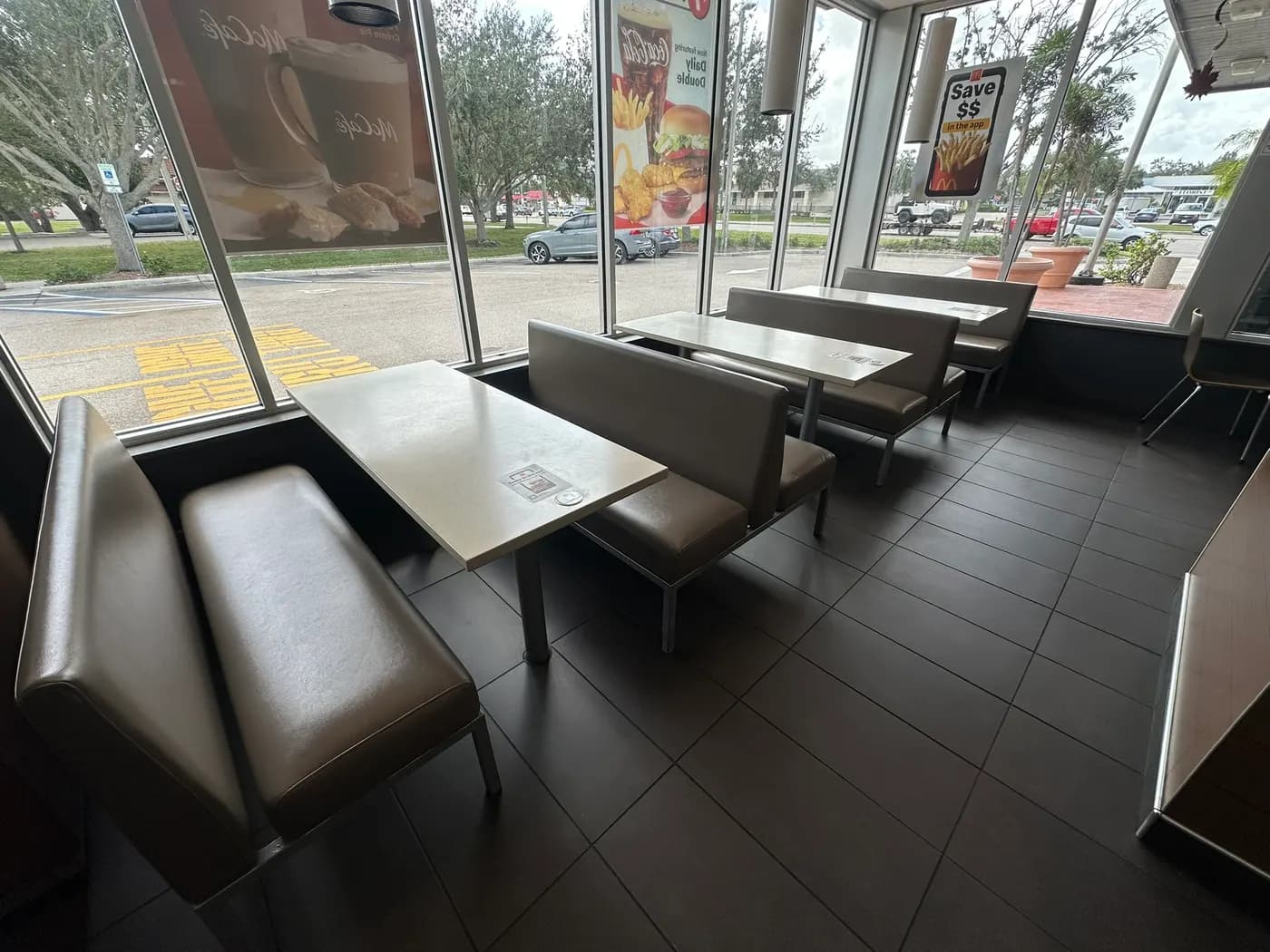
We always do a single booth first and have you look at it in your own lighting, with your own tables, before we build the other twenty. Vinyl swatches lie. A grey that looks warm under shop fluorescents can read cold under your pendants, and a texture that seemed subtle on a sample card can be busy across a whole room.
Approving one finished booth costs a few days at the start and removes the risk of a mistake repeated across the entire dining room. Nobody has ever regretted this step.
Material: this is where money is saved or wasted
Restaurant seating fails in specific, predictable ways, and almost all of them trace back to the wrong material. Residential-grade fabric in a commercial dining room will look tired within a year, and the first thing everybody blames is the upholsterer.
What matters:
- Abrasion rating. Commercial materials carry a tested double-rub figure. Residential ones often do not. The standards behind those ratings come from the contract textile trade, documented at contracttextiles.org.
- Cleanability with your actual products. Not the gentle cleaner the spec sheet assumes, the sanitizer your closing crew really uses at eleven at night. Tell us what that is and we will pick material that survives it.
- Seam placement. Every seam on a horizontal surface is a crumb trap and a future failure point. Good commercial work puts seams where bodies and food are not.
- Foam density. A booth seats hundreds of people a week. Residential foam is flat by spring.
We went deeper on the selection process in choosing commercial upholstery fabric.
Fix the cause, not just the cover
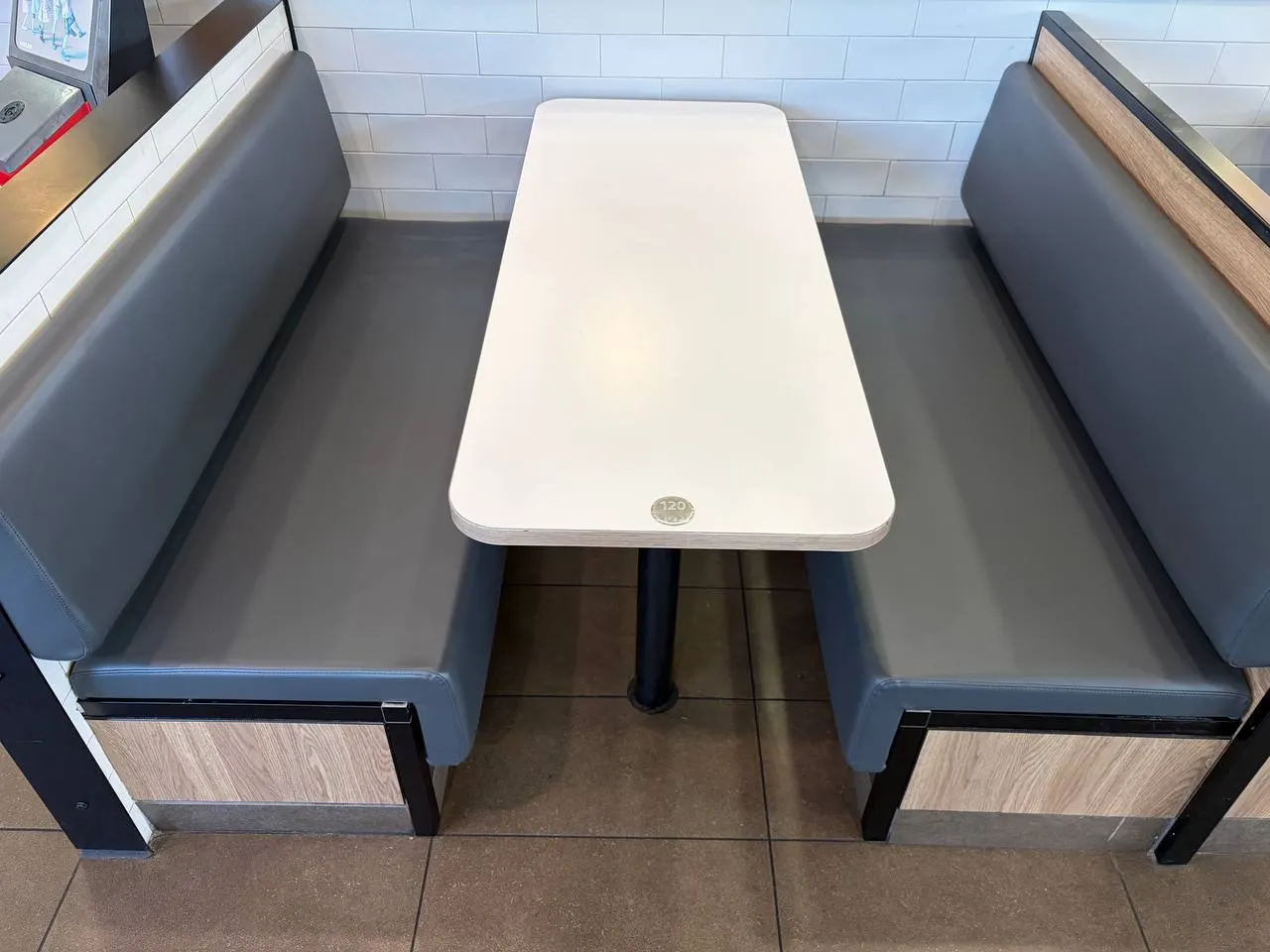
While a booth is apart we can see why it failed, and it is worth a minute of your attention. Loose frames that rack every time somebody slides in. Backs that were never fastened properly. Bases where the plywood has softened from mopping. Replacing the cover over any of that just resets the clock on the same failure.
Booths wear out in patterns, and those patterns tell you things about your room. We wrote about it in why restaurant booths wear out, and the replacement cycle question is answered in how often restaurants should reupholster.
Multi-site and franchise rooms
If you run several locations, or a franchise with brand standards to hit, the sequencing advantage compounds. We build to one approved specification and roll it across sites on a schedule that suits each room, with consistent material and consistent construction, which is exactly what a brand audit is looking for. That side of things lives under bulk commercial upholstery. The National Restaurant Association keeps useful operator resources at restaurant.org.
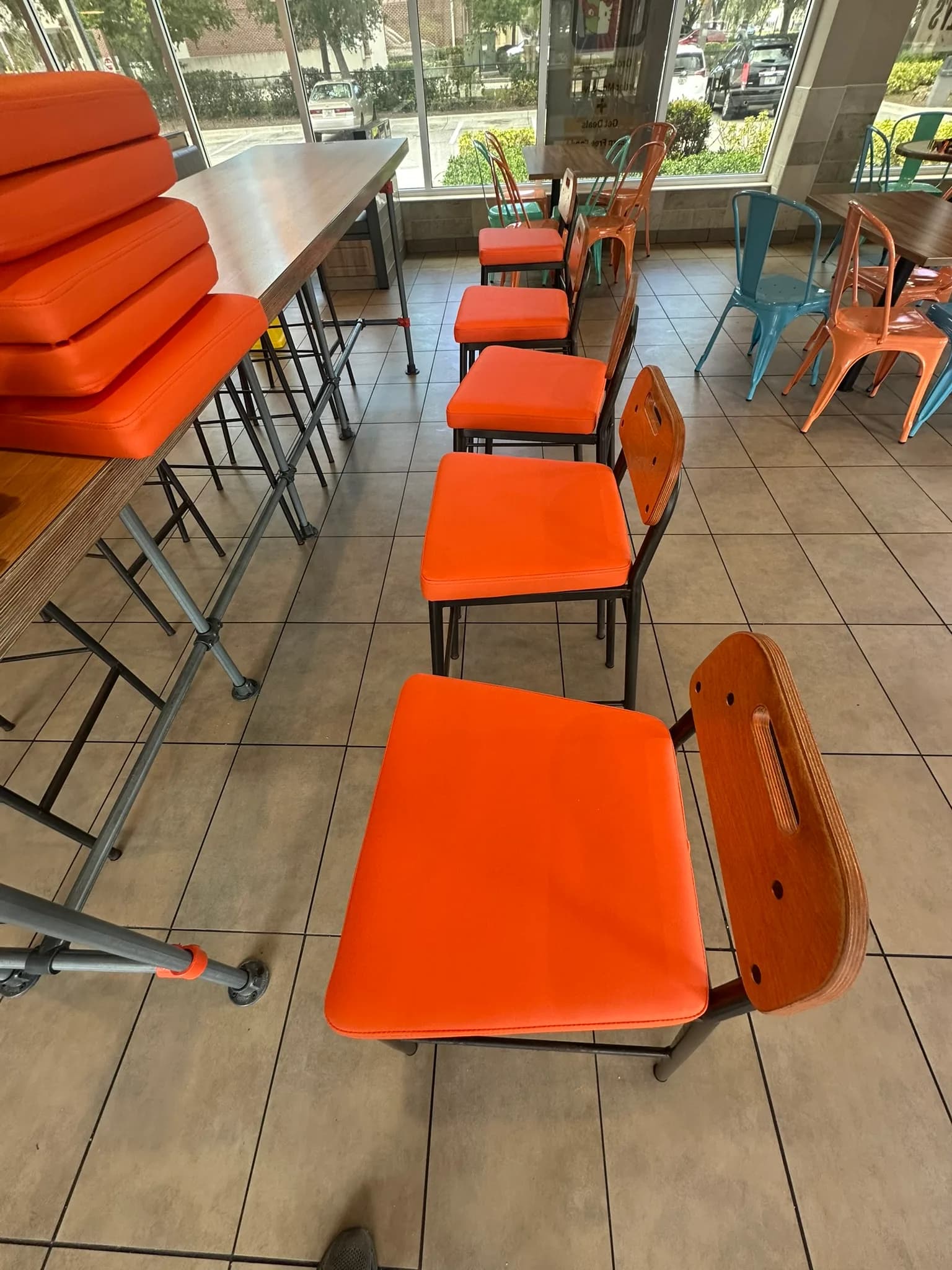
Booths are the headline, but a dining room is more than booths. Bar stools, chairs, waiting benches and banquettes all wear at different rates, and we handle them under booth reupholstery and the wider commercial upholstery service. Hotels and lobbies follow the same playbook, covered in hotel and hospitality upholstery.
Frequently asked
Can you reupholster a restaurant without closing it?
In most dining rooms, yes. We work section by section or overnight, so there is never a moment where the room cannot seat guests. It takes more planning and a bit more coordination than closing for a week, but for most operators losing zero covers is worth the extra scheduling.
How long does a dining room take?
It depends on the number of booths and whether we are recovering in place or swapping prebuilt cushions. Once the first booth is templated and approved, the rest move quickly. A typical dining room is measured in nights, not weeks.
What material should restaurant booths be?
A commercial-grade vinyl or a heavy contract fabric with a real abrasion rating, not residential material. It needs to survive constant cleaning with the products your staff actually use, which is a harsher test than most people expect.
Running a tired dining room? Send us photos and your booth count and we will come measure and put together a schedule that keeps every table in service.
Let's give your piece a second life
Marine, auto, furniture and more. Send a few photos or bring it by the shop for an honest, free estimate.