Custom Cushions for Built-In Benches and Breakfast Nooks
Furniture · August 25, 2026 · 8 min read
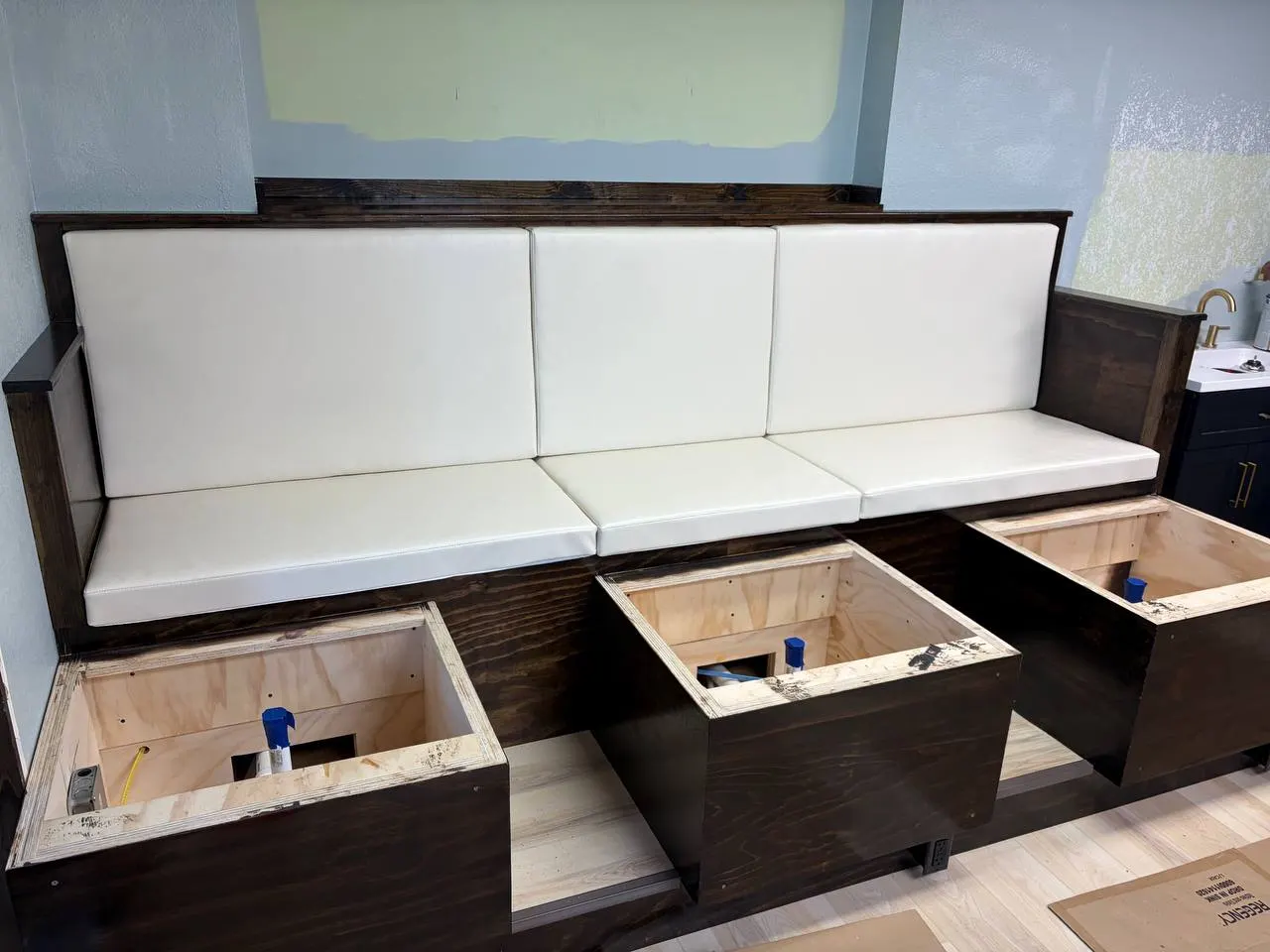
Built-in benches are having a moment. Breakfast nooks, window seats, banquettes tucked into a dining corner, mudroom benches with boots underneath. They make a room feel finished and they seat more people in less space than chairs ever will.
There is just one catch. The carpenter builds you a beautiful wooden box, and then everybody stands around looking at it, because a bench without cushions is furniture you do not want to sit on. That part is ours.
Why built-ins are not the same as buying cushions
A sofa cushion has a known size. A built-in does not. Every bench is one of one, built into a corner that is probably not square, against a wall that is probably not plumb, with a back angle somebody decided on site.
So we do not work from the plans. We template the bench after it is built, which is the only way to end up with a cushion that sits down into its opening with an even gap all the way around rather than one that binds at one end and gaps at the other. If you have ever seen a nook cushion that has to be forced in, that is a cushion built to a drawing.
Getting the seat height right
This is the detail that makes a nook comfortable or awkward, and it is decided before anything is sewn.
A dining bench wants to land somewhere around eighteen inches from floor to the top of the compressed cushion, so it works with a standard table. Note the word compressed. A four inch cushion does not stay four inches tall when somebody sits on it. Build the bench at eighteen inches and add a four inch cushion and you have just made a bench that puts the table in your ribs.
The fix is to plan the cushion thickness and the bench height together. If the woodwork is already done, we work backwards and choose the thickness and the foam density that gets you to the right finished height. This is exactly the kind of thing worth a conversation before the saw comes out.
Foam, and the mistake everybody makes
People choose foam by pressing it with their hand in the shop and picking the one that feels nicest. That is how you end up with a pancake by Christmas.
A bench seat needs firm, high-density foam. Not because firm is better in the abstract, but because a dining bench gets sat on hard, slid across, knelt on by children and used as a step stool at least once. Density is what resists that, and it is a different property from firmness, which we untangle in foam 101. Back cushions can and should be softer, because nobody is putting their full weight on them.
Firm seat, soft back, correct finished height. Get those three right and the bench gets used every day. Get them wrong and it becomes the place where mail lives.
Fabric choice, honestly
A breakfast nook is the hardest-working seating in a house. It takes toast crumbs, spilled juice, sunscreen, wet swimsuits in a Florida home, and a great deal of sliding in and out.
- Vinyl wipes clean instantly and is the practical choice for families and for anything near a pool. Modern vinyls look nothing like the diner booths you are picturing.
- Performance fabrics are the compromise most people end up loving. They look like woven linen or textured cotton and clean like plastic. Fabric houses publish durability ratings, and the trade association behind those standards is at contracttextiles.org.
- Ordinary decorative fabric is beautiful and belongs on a window seat in a quiet room, not under a toddler with a bowl of cereal.
The same thinking applies to sofas, which we worked through in how to choose the right fabric for your sofa, and the pets and children version is in the best upholstery fabric for pets and kids.
Removable covers are worth the extra
If the bench is in a kitchen, ask for zippered covers. It costs a little more up front and it means that in five years, when the fabric has finally lost an argument with a bottle of olive oil, you are replacing covers rather than rebuilding cushions. The foam and the templating, which is most of the work, stay yours.
Storage benches have one extra rule
A lot of built-ins have drawers or lift-up lids underneath, and that changes the cushion. A lid has to open without the cushion fouling the wall or the piece next to it, which means the cushion has to be secured to the lid rather than floating loose, and the back edge has to be profiled so it clears. Drawers are simpler but need the cushion front edge to sit proud of the drawer face.
It is a small thing that is very obvious when it is wrong, which is why we ask about the storage before we cut anything.
Commercial banquettes follow the same rules, harder
If this is for a restaurant rather than a house, everything above still applies with the dial turned up: higher density foam, commercial-rated material, and construction that survives a hundred people a day rather than four. That side of our work lives under commercial upholstery, and the material durability question is covered in choosing commercial upholstery fabric.
For homes, built-in cushions sit alongside the rest of our furniture reupholstery work, including cushion and foam replacement and headboards and ottomans when the nook turns into a whole room project, which it often does.
Frequently asked
Can you make cushions for a bench I already built?
Yes, and that is most of this work. Your carpenter builds the bench, we template the finished openings and build cushions to fit them exactly. Templating after the woodwork is done is far more accurate than working from drawings, because real benches are never quite as square as the plan was.
What foam should a built-in bench seat use?
A firm, high-density foam for the seat, around four to five inches thick for a dining bench, and something softer for the back cushions. The mistake people make is choosing soft foam because it feels nice in the shop. Six months later it has flattened and you are sitting on plywood.
Fabric or vinyl for a kitchen nook?
If children eat there, vinyl or a performance fabric, every time. A breakfast nook takes more abuse than a sofa ever will. Modern performance fabrics look like linen and wipe like vinyl, which is usually the happy answer.
Got a bench waiting for cushions? Send us photos and rough measurements and we will come template it properly.
Let's give your piece a second life
Marine, auto, furniture and more. Send a few photos or bring it by the shop for an honest, free estimate.